What Changed in 2026
On 1 January 2026, the new US Visa ban for travel rules took effect for Nigeria. A presidential proclamation signed in December 2025 placed Nigeria on a partial restriction list, alongside 18 other countries at first, later expanded further. This isn’t a full entry ban. But it does make most new visa applications from Nigeria far harder than before.
Three separate changes are hitting Nigerian applicants at once. Each one matters differently depending on your situation. Let’s break each one down clearly.
Change 1: The Partial Travel Restriction
Nigeria now sits on a “restricted and limited” list, not the full ban list. Full bans apply to a small group of countries whose citizens cannot get US visas at all right now. Nigeria isn’t one of them.
Instead, Nigerians face tighter limits on B1/B2 (tourist/business), F1 (student), and J1 (exchange visitor) visas. New applications in these categories are significantly harder to secure than before January 2026.
SEE ALSO: UK Graduate Route Visa 2026 — What Nigerian Students Need to Know – Oak GT
What this means in practice:
- If you already hold a valid US visa, you’re generally unaffected — for now
- If you’re applying fresh, expect more scrutiny, longer waits, and a higher chance of refusal
- Some categories, like certain family and employment-based immigrant visas, may still process, though slower than usual
Change 2: The Visa Bond Requirement
Since 21 January 2026, Nigeria has also been added to a separate Visa Bond Pilot Program. This one applies specifically to B1/B2 tourist and business visa applicants.
If a consular officer decides you’re otherwise eligible for a B1/B2 visa, you may now be asked to post a refundable bond before the visa is issued. The bond sits at $5,000, $10,000, or $15,000, and the consular officer decides the amount during your interview.
You’d pay this through the US Treasury’s Pay.gov platform, alongside a form called DHS Form I-352. If you comply with your visa terms and leave the US on time, the bond gets refunded. If you overstay, you lose it.
There’s also a travel condition attached: bond holders must enter and exit the US through a specific list of designated airports, including JFK, Newark, Atlanta, Chicago O’Hare, and a handful of others. Land borders and smaller airports aren’t accepted entry points under this bond.
This bond program is a pilot. It runs through 5 August 2026 unless the State Department extends or changes it.
Change 3: The USCIS Processing Pause
Beyond travel and visa issuance, Nigeria is also affected by a USCIS benefit processing pause, under a separate policy memorandum that took effect in January 2026. This mainly affects people already in the US with pending applications — things like marriage-based green cards, employment petitions, and adjustment of status filings.
If you have a pending USCIS case and you’re currently inside the US, leaving the country right now carries real risk. Some legal challenges to this pause are already working through US courts, but until a court rules otherwise, the pause remains in effect.
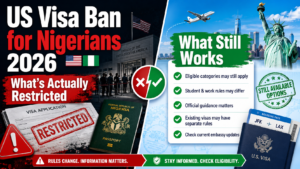
So Can Nigerians Still Get US Visas in 2026?
Yes — but the honest picture depends heavily on your specific visa category and situation.
| Situation | Current Status |
|---|---|
| Already hold a valid US visa | Generally unaffected, but avoid long stays abroad if you have pending USCIS matters |
| New B1/B2 tourist/business application | Possible, but expect the bond requirement and heavier scrutiny |
| New F1 student visa application | Restricted; check with your specific university and the US embassy directly |
| New J1 exchange visitor application | Restricted, similar to F1 |
| Pending immigrant visa (family/employment) | Processing continues but is slower than before |
| Pending USCIS application, currently in Nigeria | Delays likely under the processing pause |
Why Was Nigeria Added to These Lists?
The US government cites national security and immigration enforcement priorities, along with concerns about visa overstay rates and identity verification standards. The visa bond program specifically targets countries with historically higher B1/B2 overstay rates, based on Department of Homeland Security data.
Importantly, the US Mission to Nigeria stated in March 2026 that these restrictions aren’t necessarily permanent. Travel policies remain under ongoing review, and improvements to Nigeria’s screening, vetting, and information-sharing systems could lead to eased restrictions over time.
What Should You Do Right Now?
If you already have a valid US visa:
Don’t overstay, even by one day. Overstaying 180 days triggers a 3-year re-entry bar. A full year or more triggers a 10-year bar. Repeat violations can lead to a lifetime ban.
If you’re planning a new tourist or business trip:
Prepare financially for a possible bond of up to $15,000. Build the strongest possible application — clear ties to Nigeria, solid finances, and a genuine, well-documented purpose for travel. Book your interview early, since wait times have grown.
If you’re a prospective student:
Speak directly with your target US university’s international office and, where possible, the US embassy in Nigeria before assuming your application will proceed normally.
If you have a pending USCIS case and you’re in the US:
Avoid international travel until your case resolves or the pause lifts. Speak with an immigration attorney if your situation is time-sensitive.
If you’re just starting to plan:
This is a good moment to strengthen your overall travel profile. Building visa and travel history with other countries — the UK, Canada, or Schengen nations — can support future US applications once restrictions ease.
Are the UK and Canada Still Open?
Yes. As of mid-2026, both the UK and Canada continue processing visa applications for Nigerians through their normal channels, though both apply their usual level of scrutiny. Many Nigerians currently exploring US options are shifting focus toward these routes while the US situation develops. Our guides on the UK Skilled Worker Visa and Canada Express Entry cover those pathways in detail.
Frequently Asked Questions
Is Nigeria fully banned from getting US visas?
No. Nigeria sits on a partial restriction list, not the full entry ban list. New applications are harder and more scrutinised, but not impossible across every category.
Do I need to pay the visa bond for every US visa type?
No, the bond currently applies specifically to B1/B2 tourist and business visa applicants from listed countries, including Nigeria.
Is the bond refundable?
Yes, if you comply with your visa conditions and leave the US on time. You lose it if you overstay.
Will these restrictions last forever?
The bond program is a pilot running through August 2026. The broader travel proclamation has no fixed end date, but US officials have indicated it’s subject to ongoing review and could change if Nigeria meets certain benchmarks.
Can I still apply for a US student visa from Nigeria?
F1 visas face restrictions under the current proclamation. Confirm directly with your university and the embassy before making firm plans, as individual circumstances vary.
What happens if I already have a pending green card application and I’m in Nigeria?
Processing continues but may be slower under current conditions. Speak with an immigration attorney about your specific timeline.
This article reflects the situation as of July 2026. US immigration policy is changing quickly — always confirm current rules at travel.state.gov before making firm plans.